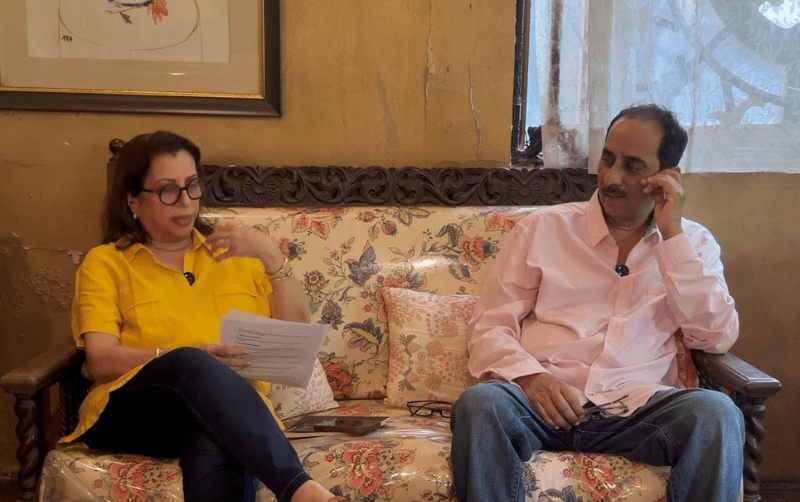

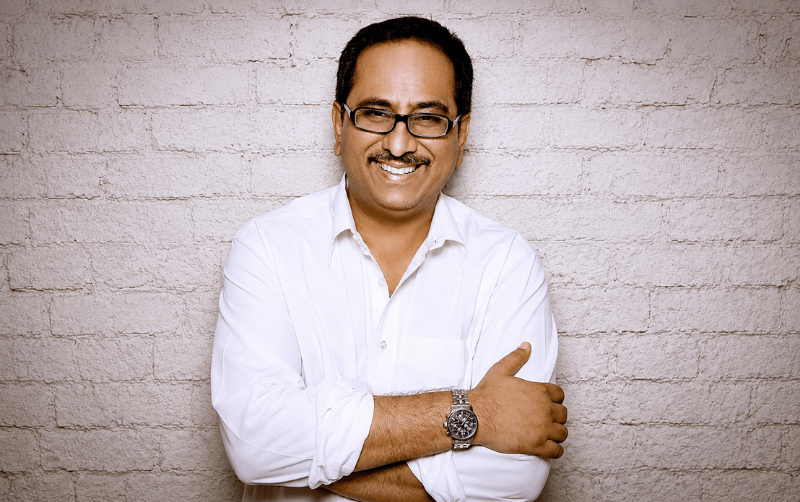
For more than four decades, veteran journalist Dinesh Raheja has held a singular place in Indian film journalism, part historian, part storyteller, part poet. Dinesh has built a career spanning magazine editorship, television scriptwriting, film history, and verse, becoming one of the most recognisable voices on Hindi cinema since the early 1980s. He grew up in Mumbai, where the Hindi film industry shaped his early fascination with cinema, but little did he know that it would soon become a full-fledged career. He began writing professionally in 1982, when Bollywood journalism in India was dominated by a handful of glossy fan magazines and a small circle of insider writers. He brought a more analytical, historically minded sensibility to this world, treating film not merely as gossip fodder but as a subject worthy of serious documentation.
The centrepiece of his journalism career was his decade-long stint as Editor of Movie magazine- a role held from 1988 to 1999. Under his stewardship, the magazine became known for combining star profiles with a more thoughtful engagement with Hindi cinema’s craft and history, a blend that set Dinesh apart from many of his contemporaries. During these years, he built the reputation that would define the rest of his career: a journalist capable of coaxing candid, in-depth conversations from some of Indian cinema’s biggest and most guarded names. He remembers interviewing leading film actress Rekha, whom he quizzed for more than 15 hours, Monday to Friday (3 hours each day).
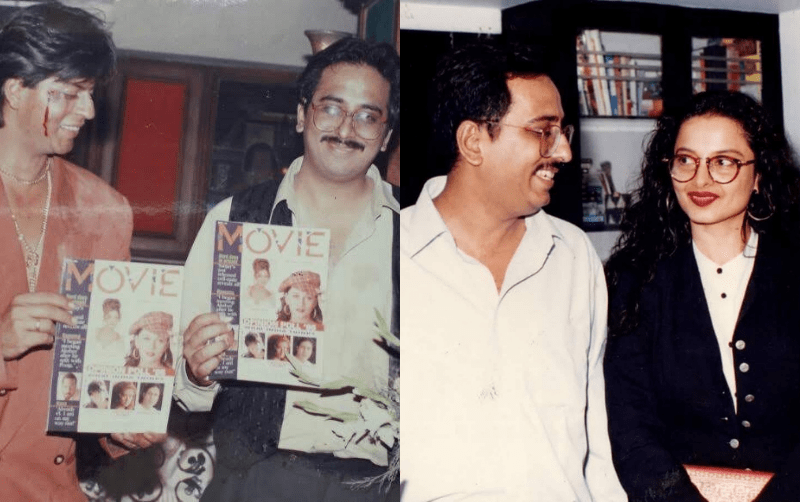
Over the years, Dinesh has interviewed an extraordinary roster of stars and filmmakers, including Dilip Kumar, Dev Anand, Amitabh Bachchan, Rajesh Khanna, Rishi Kapoor, Anil Kapoor, Rekha, Sridevi, Madhuri Dixit, Dimple Kapadia, Salman Khan, to name a few. These weren’t the standard promotional Q&As typical of film magazines. His interviews were often noted for their analytical depth, probing beyond publicity lines to explore the artistic choices and personal histories behind these careers. But to think Dinesh was looking for a career in broader journalism was wrong. He needed to move with the times, and he did.
After his years at Movie, Dinesh’s byline continued to travel widely across Indian print and digital media. He served as the Channel Manager of India Today Online and as Editor of the Bollywood News Service, extending his reach into the growing world of internet journalism as it took shape in India in the late 1990s and 2000s. He also became a long-running columnist, writing for Rediff.com and Sunday Mid-Day for well over a decade. His articles have appeared in some of the country’s most prominent publications, including The Times of India, The Indian Express, The Hindustan Times, India Today, and Outlook. Notably, Dinesh also edited several issues of Postermag and Classic Postcards, niche publications tied to the visual and collectable culture surrounding Hindi cinema.
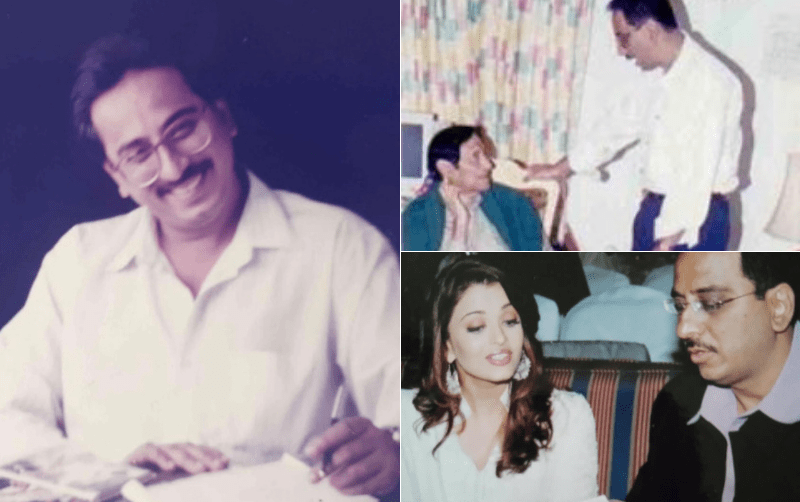
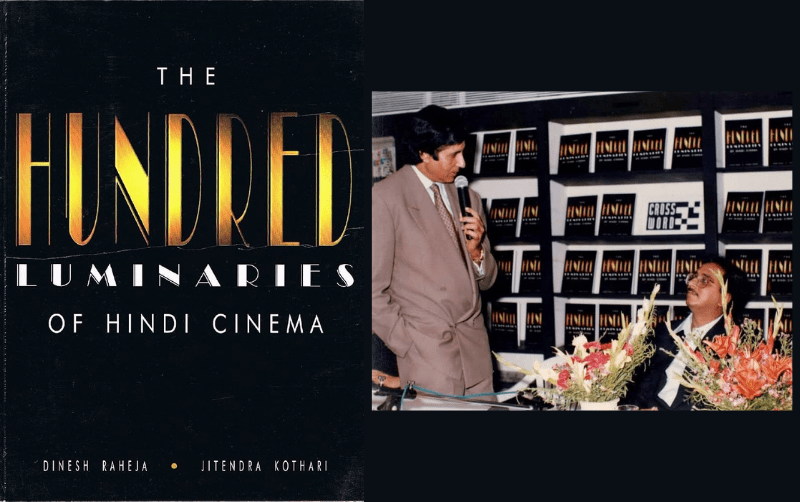
Where many entertainment journalists focus on the present, Dinesh developed a parallel identity as a committed film historian, working largely to preserve and document the legacy of Hindi cinema’s earlier decades. Much of this work was carried out in collaboration with film archivist and historian Jitendra Kothari, with whom Dinesh has co-authored five books over nearly two decades. Their first collaboration, The Hundred Luminaries of Hindi Cinema (1996), profiled a century’s worth of significant figures in Indian film. They followed this up with Indian Cinema: The Bollywood Saga (2004), a broader survey of the industry’s evolution. The duo then turned to a more specialised and ambitious project: reconstructing and publishing the original screenplays of classic Hindi films, complete with cast and crew interviews reflecting on their experiences during production. This resulted in three volumes –Sahib Bibi Aur Ghulam (2012), Chaudhvin Ka Chand (2014), and *Kaagaz Ke Phool (2014). These books were valued not just as nostalgic artefacts but as genuine works of preservation, documenting Bollywood’s Golden Years.
Dinesh’s storytelling instincts also found an outlet in television. He wrote the concept for Tony and Deeya Singh’s Just Mohabbat and became among the prominent writers on Ekta Kapoor’s popular serial Kasamh Se (2006). His stature as a film historian led UTV to commission him to write two seasons of the BBC World show Film India, hosted by actor Victor Banerjee, a programme that brought his encyclopaedic knowledge of Hindi cinema to a documentary format.
In 2017, he extended his decades of accumulated knowledge into mentorship, launching the Dinesh Raheja Workshop, through which he teaches aspiring entrants to the media and film industry. The workshop covers subjects ranging from image-building to the broader craft of working within the entertainment media landscape, allowing Dinesh to pass on the practical and historical knowledge he has gathered since the early 1980s.In my opinion, few figures in Indian entertainment journalism have sustained such a wide-ranging body of work across so many decades, making Dinesh a genuinely distinctive presence in how Hindi cinema has been written about, remembered, and understood.
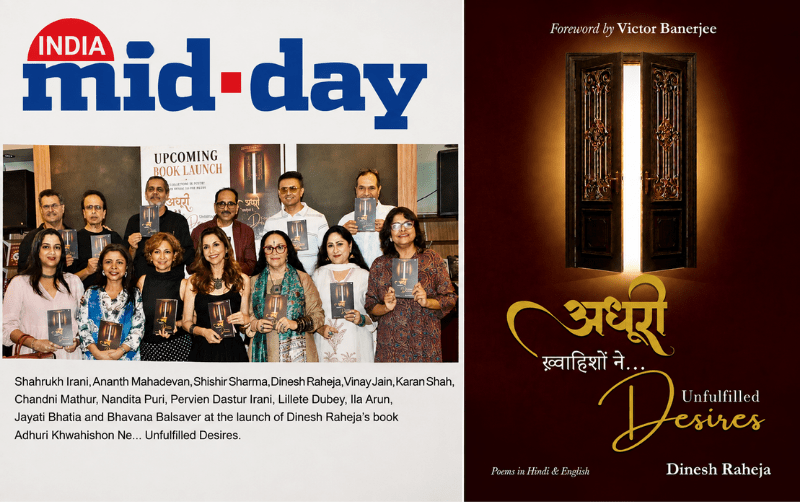
But who knew that Dinesh was actually also a Poet within the Journalist? His relationship with verse is actually fascinating, a lesser-known strand of a career that most people only associate with film journalism. Of late, I realised, as I chanced on his first book, 101 Haiku, that poetry has run quietly alongside his more public writing. From his first Hindi poem, Buddapa (age 12), to today’s poetry in both English and Hindi. His individual poems, published in various magazines and newspapers over the years, have been well received by readers on literary platforms. His new poetry book, Unfulfilled Desires, is a bilingual collection of Hindi and English poems that brings together his reflections on love, longing, hope, loss, and desires left unfinished. The launch on August 14 2026 was very well received.
I find the timing moving: after spending so much of his life documenting other people’s stories, particularly the stories of Cinema, he is now turning inward in the August of his life and examining the emotional landscape of his own life. Dinesh shares that his wonderful wife, Anita Raheja, who has been a cookery writer and author,a celebrity in her own life (25 years) had something to say about him lately-Dinesh really believes in himself, and I find that I believe in him” A befitting tribute indeed.