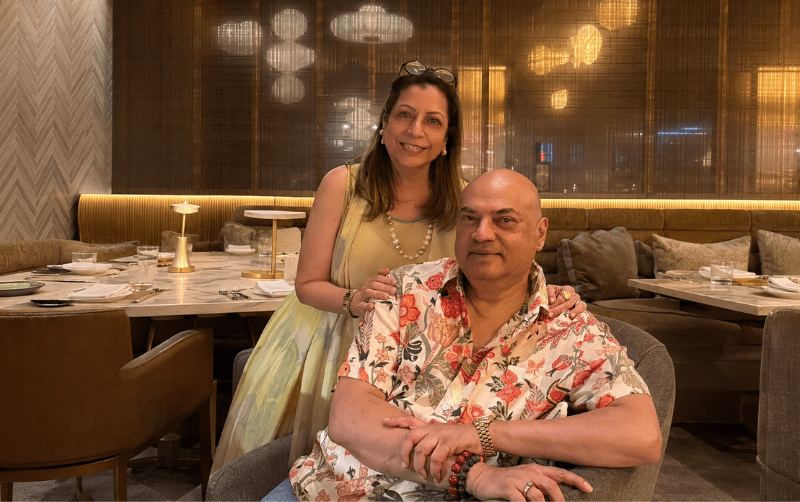

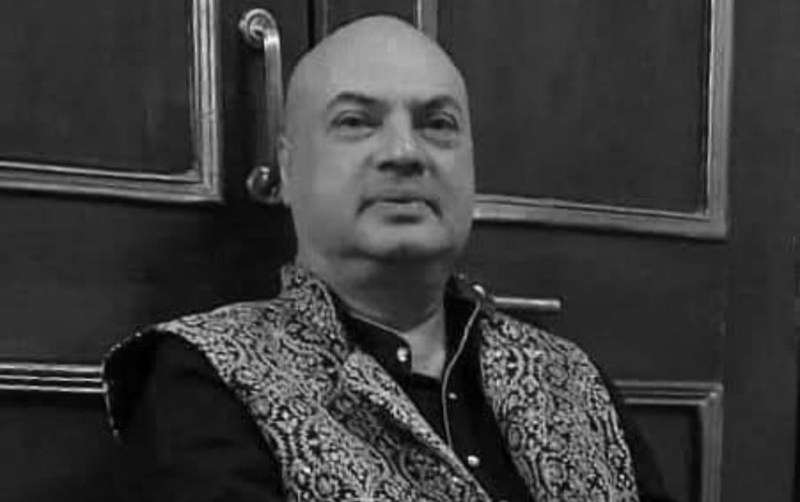
Almost everybody has heard of the legendary filmmaker Shri Bimal Roy, the maker of classic films such as Do Bigha Zameen, Madhumati, Sujata, and Bandini. But how many of us have bothered to find out if he left behind some of his cinematic legacy in his family? I had the good fortune of getting to know Joy Roy, the author of his much-celebrated book, Ramblings of a Bandra Boy. A complete delight, he is today much more than just the son, but a man who has consciously carved out his many identities as a docu-filmmaker, writer, designer and, in my view, a raconteur of sorts.
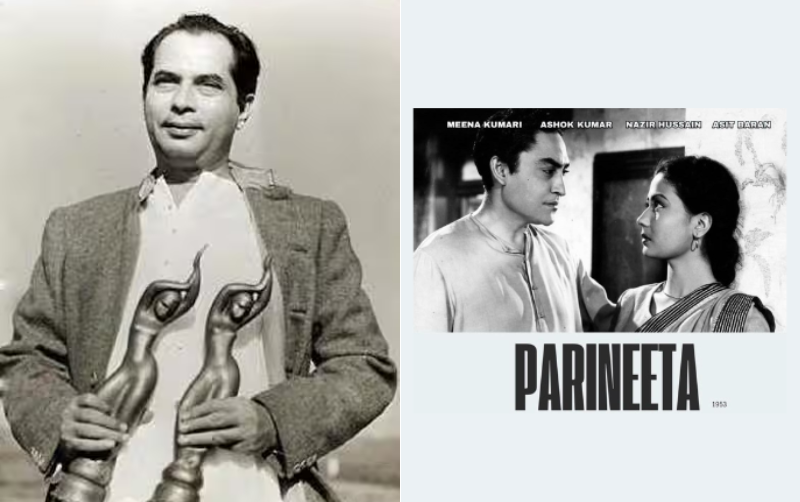
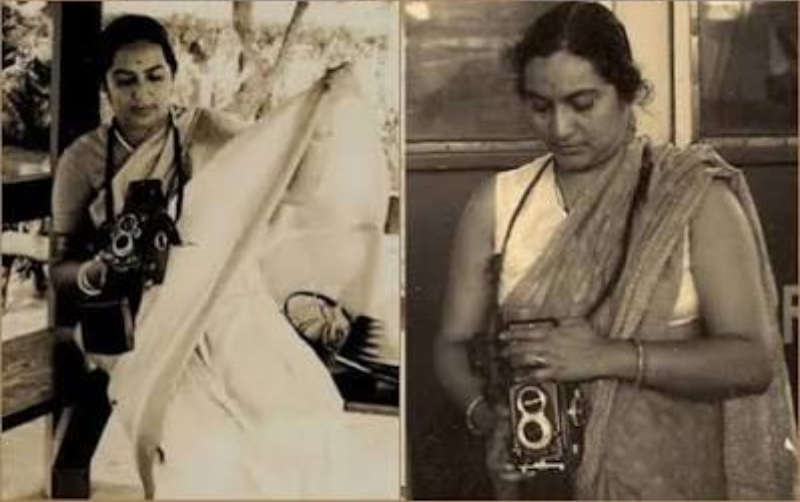
Of course, he had a childhood steeped in cinema, his home frequently graced by the greats of the time, like Dilip Kumar, Nutan, Shammi Kapoor, and Hrishikesh Mukherjee. Joy is the youngest of Bimal Roy’s offspring and the family’s only son. He states that he never really got to know his father but was closest to his mother, Manobina Roy, who, along with her twin, Debalina, was one of Independent India’s early women photographers. A formidable woman and remarkable in her own right, she was also a gifted writer and artist with a distinctive visual sensibility. She and her sister Debalina had been photographers since they were teenagers (1930s), an era when photography was overwhelmingly a male pursuit. She remained an artist despite family responsibilities. Joy was always awed by the mothership because he had greater access to it. After her death (2001), he painstakingly catalogued thousands of negatives and prints, titled it A Woman and her Camera (2109-20), dedicated to her photography and to helping restore her place in photographic history.
Just as he did for his mother, Joy made a documentary, Remembering Bimal Roy (2005), as a tribute to his late father. It was an oral history of Bombay’s golden age of filmmaking, told through conversations with the people who worked alongside him. Also, it was the result of a search for a father that he did not know. He died before Joy turned 11. ‘He was almost wedded to his work. He left early while I was awake and returned when I was asleep. Also, he didn’t like his family to be a part of the film world. I have no memories of him at all. I got to know him through his films, but that is obviously not enough. Eventually I began to seek out people who had worked with him and interview them. Preserving his father’s legacy meant keeping his work alive, so in 2016, while clearing his father’s studio premises, Joy discovered unfinished reels of a long-lost docu named Amrit Khumb ki lhoj mein. He later helped restore and showcase this remarkable piece of cinematic history. He never misses a chance to hold retrospectives on his father and speak about them, as he did at the Kala Ghoda Festival and at the Bangalore International Centre.
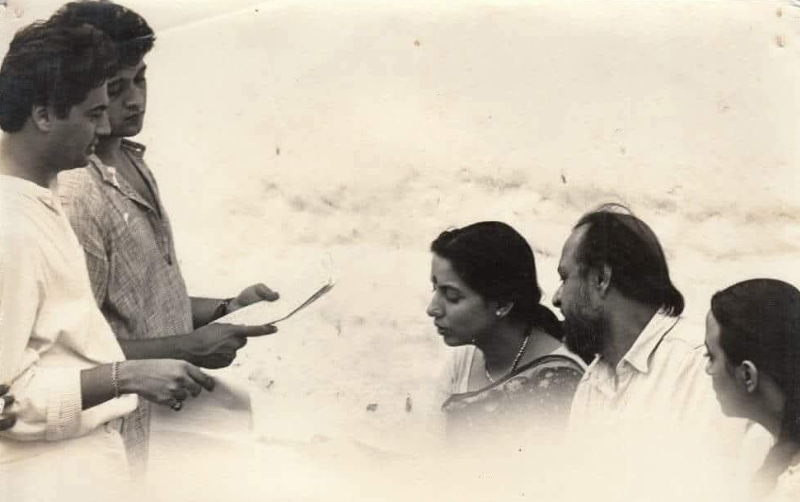
Strangely, Joy never pursued a long career as a filmmaker. Despite his roots, he never really fit into the world of grease paint and arc lights. He preferred to work (late 1970s-early 1980s) with India’s leading parallel cinema filmmaker, Shyam Benegal, as an assistant on several films and documentaries. This he realized was a valuable apprenticeship, exposing him to serious filmmaking rooted in realism- the very tradition his father had helped establish. He also worked as an executive producer for television and later as an artist and a repertoire (A&R) manager with an international company before moving into design. His heart has always been in design, as is evident in the wonderful way he has restored and maintains his family home in Mt Mary, where he resides with his sister Aparajita (Bubuni).
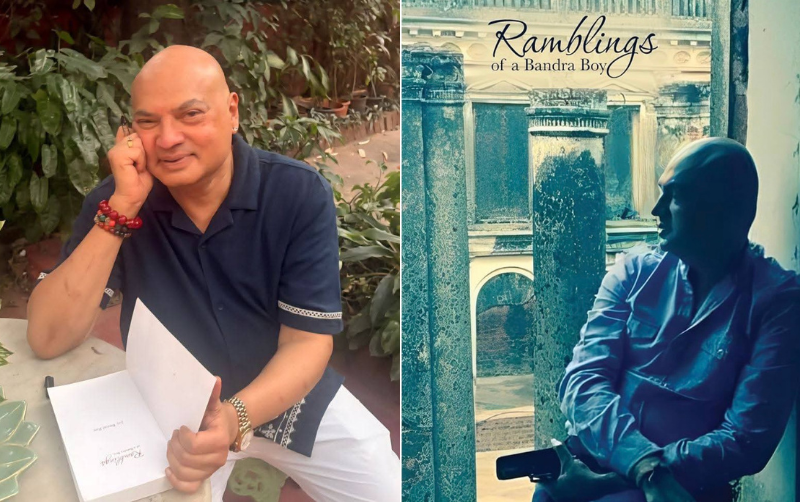
Ramblings of a Bandra Boy
Although he moved away from filmmaking, His strengths as a writer are many; for example, he is a remarkable storyteller with an extraordinary memory that he recounts with astonishing clarity; his memories are factual and textured. He has deep empathy and self-deprecating humour, and is happy to laugh at himself. His conversational tone is another of his greatest strengths. His humility peeps out when he refrains from name-dropping.
All the qualities of a likeable narrator. What made the book especially engaging was that he does not merely recount film history; he recreates a vanished Bombay, old Bandra bungalows, neighbourhood characters, family meals, and the warmth of a city that turned modern. The book is as much about disappearing Bombay as it is about the Bimal Roy household; his stories are nostalgic, without the sentimentality, and snarky humour takes over in most places to camouflage self-deprecation. Today, Joy shows so many traces of being a true-blue Bengali; he often describes himself as a quintessential Bengali Babu. Definitely not by any means arrogant or pompous, but someone who enjoys the finer things in life- music, conversation, art and above all, food. In his book, it is as if food has a character of its own. Food connected to his past, his mother’s kitchen; it’s like someone preserving a family archive through recipes. He uses it as a backdrop in all his addas. He uses it in all his stories but never in isolation. Food is the portal to people and places, and for Joy, his book was filed with flavors as much as with his people.
Design as a second career?
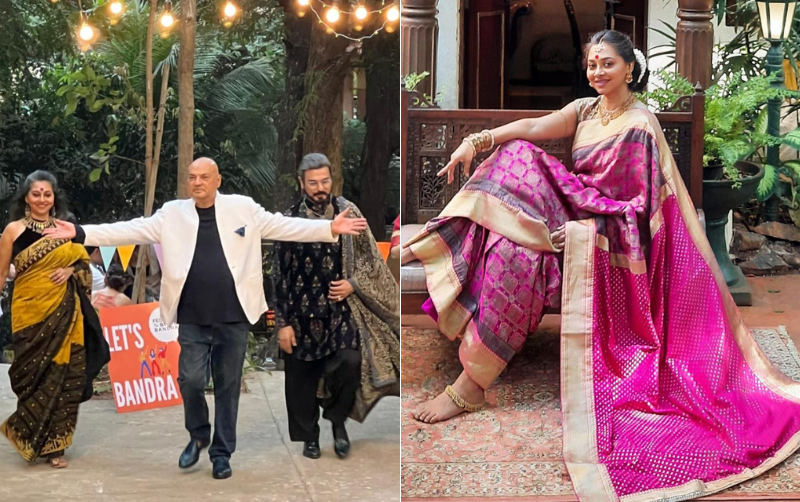
Joy’s foray into design is one of the least publicised yet most fascinating chapters of his life. He has become known for creatively transforming heirloom saris into contemporary garments and furnishings for discerning clientele. It reflects the same qualities evident in his writing: an eye for beauty, reverence for heritage, and an immense dislike of waste. Soon after his work in films, he gravitated towards interiors and fashion. Joy’s best-known design collaboration has been with James Fereira, a pioneer of Indian Pret and draped couture. Together they worked on a unique idea- giving old saris a second life. Joy’s appreciation for vintage textiles and family heirlooms complemented Ferreira’s design language, making the collaboration feel more organic than commercial. Of course, this idea came from Joy’s life, when he lost his elder sister Yashodhara. He started salvaging exquisite borders and pallus, combining them with complementary fabrics. For him, everything he has done is not technical but emotional. He uses design as storytelling. He believes heritage should be lived, not merely displayed. He rescues memories from being forgotten, thus giving them new life.
All his sentiments have captured his philosophy of life. He is very appreciative of genuinely good people, like I am of him.