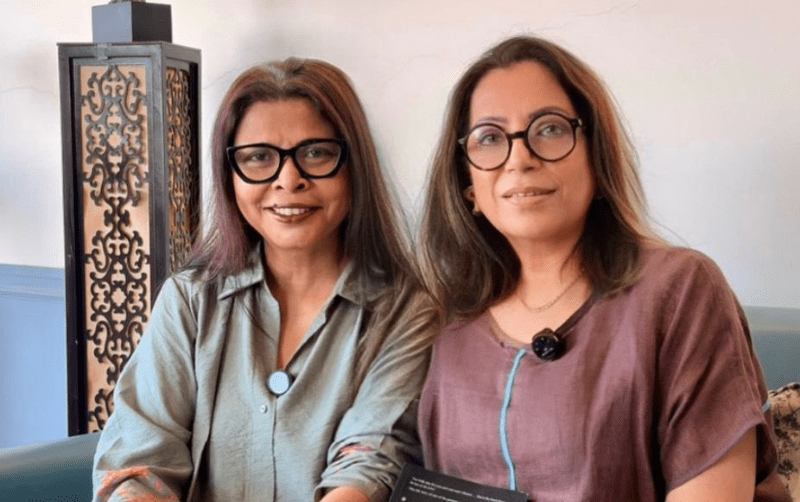
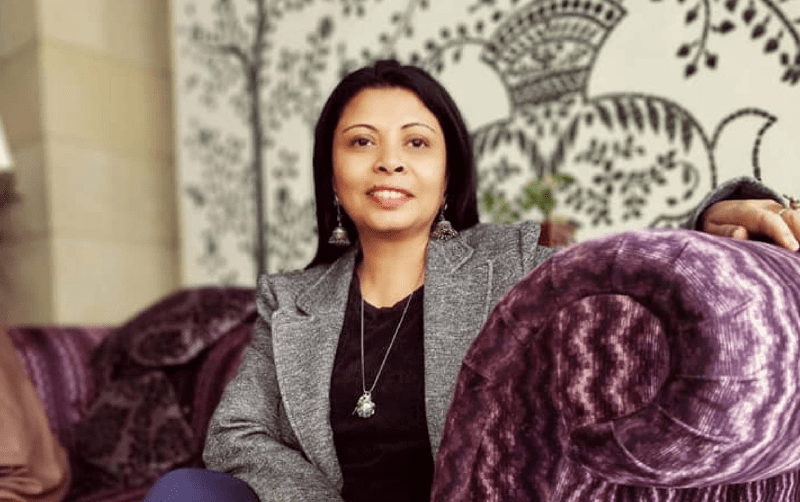
Sometimes it is so difficult to break out of a mould when one marries an actor, but Nandita’s story has been different; she has lived many lives and today wears so many hats successfully. She was a literature student who started out as a journalist in Kolkata (at 20) and became a writer for some really illustrious newspapers and magazines like The Telegraph, The Statesman, The Times of India, and Reader’s Digest. She was well known for her two popular columns in the Midday and the Dainik Bhaskar for over a decade. Not to forget, she was also a broadcast Journalist for AIR and Radio Network in Kolkata and was a member of the script committee for the NFDC and the CFSI. All this has led her to be a TED Speaker as well.
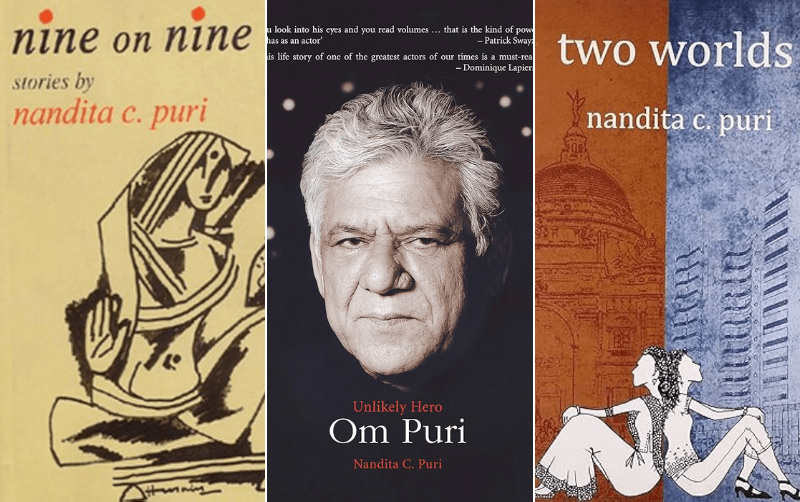
Being an accomplished Journalist, she progressed to writing a number of critically acclaimed books, namely an anthology of short stories, Nine on Nine, and a novel, Two Worlds. Her writing often explores themes of human relationships, social inequality, women’s experiences, identity, and displacement, and, of course, since she writes for Television, film, documentaries, as well as Shorts, some about culture. The biography of her late husband, veteran actor Om Puri, titled Unlikely Hero, earned her many accolades, as it was considered one of the most candid biographies of an Indian actor.
Nandita met Om Puri at 22, married him in 1993 (at 24), and lives with her son, Ishan Puri, in Mumbai. Visiting her at home was such a delight, as she was open to sharing so much, and her hospitality was, of course, on another level. I wondered why biographies reveal as much about the author as the subject. I asked what the one memory of her late husband is that still makes her smile – “Actually, there are loads of them, but clearly one is etched in my mind. I was then a journalist with the Telegraph, and I was assigned to talk to him (a cub reporter) while he was shooting ‘City of Joy ‘with Roland Jaffe opposite Patrick Swayze. When he opened the door to me in his dark track suit, the contrast made him look fair, and I had always seen him in such dark roles that he struck me as so handsome, and his smile made the moment endless.’ I actually felt her love at that moment, for a woman, it’s always the first encounter that seals it.
Moving on, we talked about many things, and some went like this: You wear so many hats, which suits you best now that you are so much older and settled? – ‘I still do everything, my life is so much more now that Ishan is his own person, I have slowed down and taken a bit of a back seat, but now I am more mother and a Chef as when initially I had married Om, I was a lousy chef, he cooked- I ate, but the pandemic changed all that. Now I am obsessed with good food and, of course, writing, which I cannot survive without. The next being running the Om Puri Foundation, where we encourage a lot of collabs, and do a lot of events and festivals, bringing his legacy alive.’
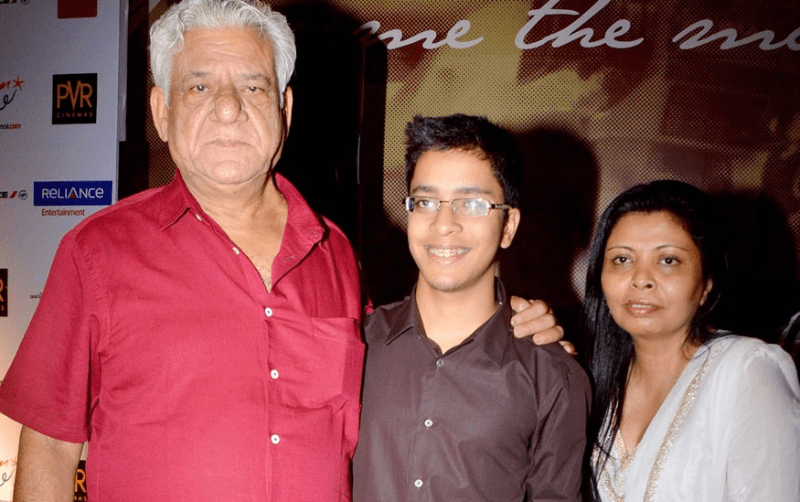
In 2017, she launched the OM Puri Foundation at the 70th Cannes Film Festival in memory of her husband, to carry forward his legacy. Today, she chairs the foundation. Nandita has been telling other people’s stories from her journalism days, but the story from her journey that has shaped her the most was her father making her read through her childhood; it was Tagore all the way, and the music was classical. Coming from a journalistic background, she notices that her move from a manual typewriter, taking notes in shorthand or longhand, and those days of white ink markers for corrections to electronic typewriters, and finally to personal computers, has been quite a journey in itself. The beauty of that era was simply our independence when journalists did not have to rely on Google. Thinking skills have remained, but writing in the old-fashioned way in a beautiful cursive style has disappeared, Nandita says, ‘I still write a lot with my fountain pens, I have a huge collection of them. Children these days have forgotten how to write.’
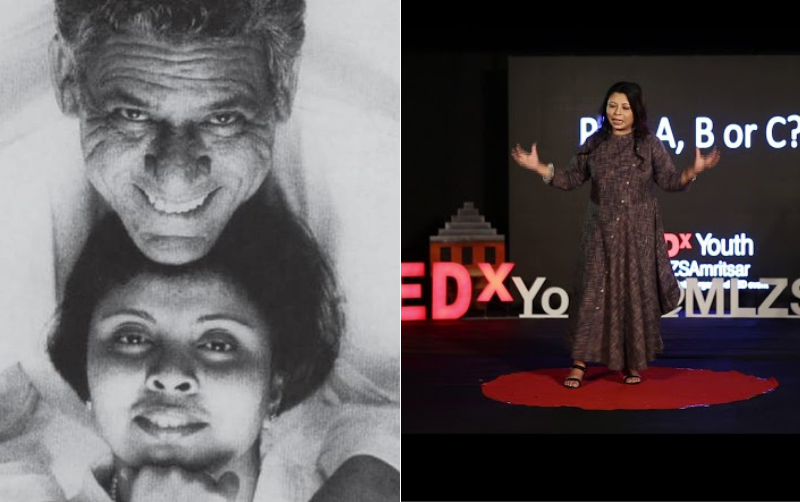
So much has changed for Nandita: marrying Om Puri, the move from Kolkata to Mumbai, and the shift from writing only about art for The Telegraph, The Statesman, etc. (since she had trained in art history). What had drawn her to the cinema? the glamour, the storytelling or the people behind the screen? Luckily, it was from her school days that she was always drawn to cinema, ‘but my father was totally not for the Hindi Film Industry, and if he were alive, he would not have been happy about my marriage to Om either. In fact, my father banned Hindi films from my life after I declared I wanted to marry Rajesh Khanna after watching Hathi Mere Saathi.’ This love for Cinema drove her to write a weekly column for Midday (for 9 years) on filmmakers, shooting, logistics, black money laundering and everything else, and of course, she would receive threats. But unbothered, she continued, listening only when Om asked her not to. Most times, he would not interfere, but sometimes, in fact, filled her in on some of the happenings. It was like she had a ringside view of the industry.
An open declaration of facts straight from the horse’s mouth- ‘I have always been politically incorrect in all my time of reportage, not fearing anybody or anything. But that was when Om was alive, not me, who has toned down to 20% from 95 % earlier. It has probably come with maturity,’ she shrugs. The one Indian film of Om’s that she feels should have received more acclaim? Aakrosh– because his silence throughout the film actually got him the National Award for it. Having said that, she also remarked that if Om were alive, he would have loved OTT, and he obviously missed that bus.
The Om Puri Foundation
The trust that remains active in his memory aims to carry forward his legacy, his philosophy, and the values he stood for in his life. To show others that he came from an extremely poor background in Agriculture, a man who, out of his sheer will, determination and hard work, fulfilled his desire of becoming an actor. The path, filled with obstacles, required him to earn scholarships to reach his goals: first to the National School of Drama and later to the Film and Television Institute of India. Lacking resources never stopped him from doing anything. The humiliating deprivation only strengthened his determination. This was formed to help those who are deserving and in need from all walks of life. From the struggling theatre students to artists to vulnerable communities. Scholarships and fellowships are offered to the children of marginalized farmers, artisanal support to groups like Dastakar, and traditional weavers. Om Puri believed that farmers were the backbone of Society and that artisans would help us become a self-reliant Society.