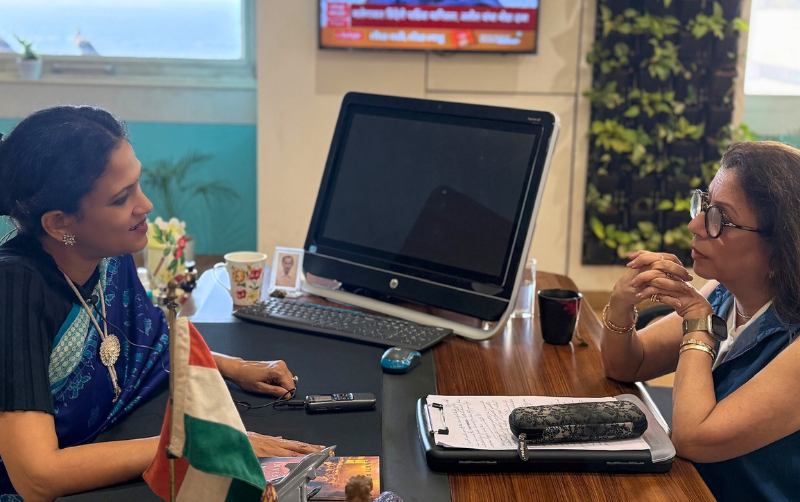

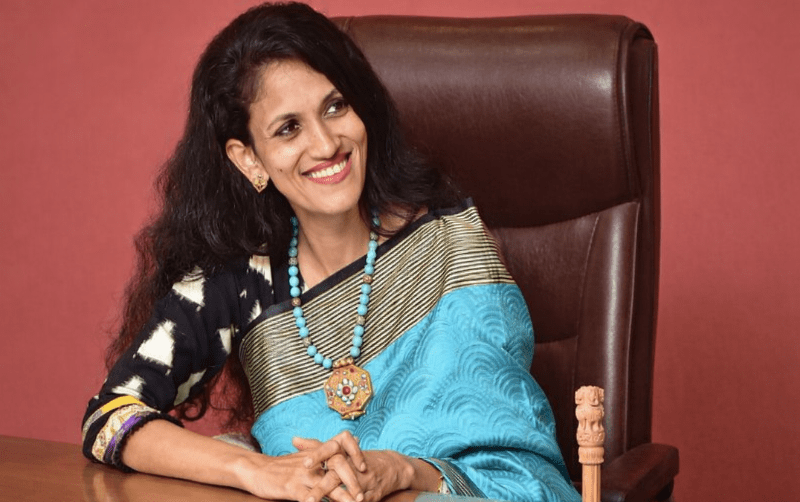
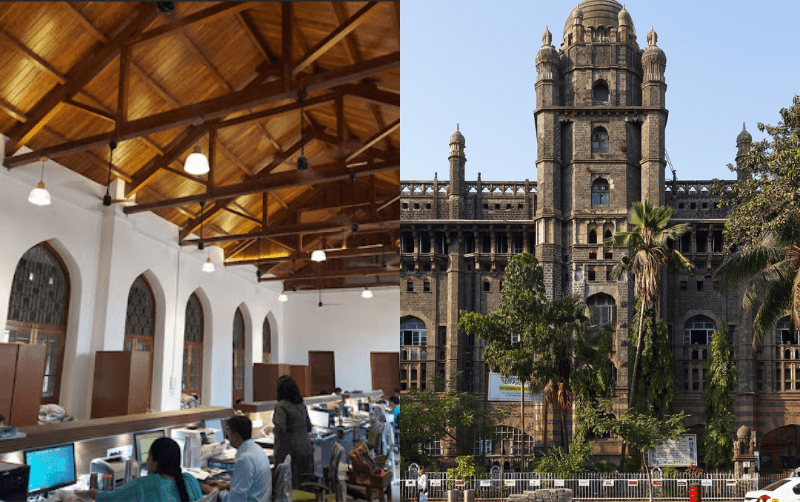
Who says that women have a glass ceiling? Not in this century, they do not. I met Swati Pandey, the Post Master General of the GPO (Mumbai), and was blown away by the strength of this woman at the helm of a completely male domain. It was India Post’s most dynamic region and the largest in India. Being taken around the GP0, I realized that Swati was also credited with initiating the renovation of the 115-year-old Mumbai General Post Office through deep research on its unique Indo-Saracenic architectural style, originally designed by Scottish architect John Begg. It was interesting because it features a grand dome inspired by the Gol Gombaz (in Bijapur), influenced by British, Moghul, and Hindu architectural elements, a heritage structure spanning 120,000 sq. ft.
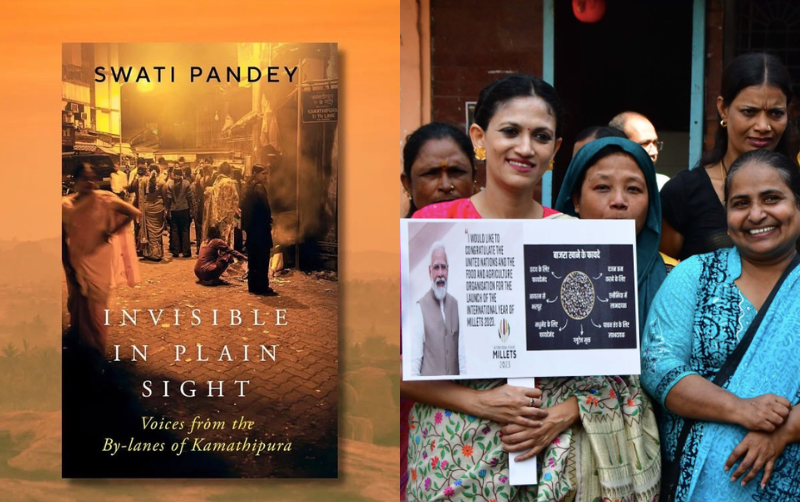
In her four-and-a-half-year tenure as the Postmaster General of Mumbai, she also earned international academic recognition for Project Kamathipura, a case study on socio-financial inclusion in one of India’s most marginalized communities. Swati used storytelling as a catalyst for social impact. Resulting in her debut non-fiction book, ‘Invisible in Plain Sight’, which is a powerful examination of the lives of the sex workers of Kamathipura, who were pushed to society’s edges.
It was on her part an unflinching exploration built on empathy. It amplified the voices and has earned critical acclaim at literary festivals throughout India. The rigorous research and the deep commitment to truth, turned it into a Harvard published case on the financial inclusion of sex workers. In 2025, it was launched in the Mumbai Lit fest.
Her thoughts
Through this work, she compels readers to confront entrenched biases and re-examines notions of privilege, dignity, and visibility.
What motivated her to write this book?- ‘I was dealing with a difficult professional phase, and this collided with my work visits to Kamathipura, their stories of humour, sheer survival, and the mere memories of who they were, inspired me.’
What was her experience with writing on such a topic? ‘Through the project, I was drawn into a world I had never really experienced before- one that contains not the-immoral women, but rather the real, resilient and immensely courageous women who are warriors; for whom life has been synonymous with a bloody battlefield where they are forced to fight every single day.’
Has there been a book that had a profound impact on you growing up? ‘Sure it was- ‘To kill a mocking bird’, and the fact that my father resembled Atticus Finch in many ways taught us to define our destiny.’
Swati aligns her work strongly with UN SDGs 5 (Gender Equality), 8 (Decent Work & Economic Growth) and 10 (Reduced Inequalities). She is widely recognized as a speaker and mentor who blends governance experience, creative storytelling, and human empathy to inspire conversations on leadership, inclusion, and sustainability.
Beyond governance, Swati is a National Award-winning filmmaker for “Elephants Do Remember” and an evocative storyteller. She attempted the making of this movie when she was on a deputation soon after she left India post in 2011. A TED-x speaker and ISB alumna, she continues to inspire with her rare blend of administrative acumen. Her creative depth and unwavering dedication to social equity and cultural preservation lead her forward in her search for truth.
Having led transformative initiatives across the Department of Atomic Energy and the Ministry of Information and Broadcasting, she has consistently elevated institutional efficiency, visibility, and public trust. A champion of last-mile delivery, she adopts a bottom-up approach to policymaking, bridging the gap between vision and grassroots execution. Her expertise spans risk management, e-commerce, HR policy formulation, and social and financial inclusion.
Her current assignment
Today, with over 28 years of public service, Swati is a distinguished bureaucrat whose career spans aviation infrastructure, logistics, finance, and public policy implementation. Being an expert in infrastructure and project management, she currently serves as the Vice Chairman and Managing Director of the Maharashtra Airport Development Company, where she is responsible for pioneering aviation projects such as the Shirdi Airport and South Asia’s largest Flying Training School in Amravati.
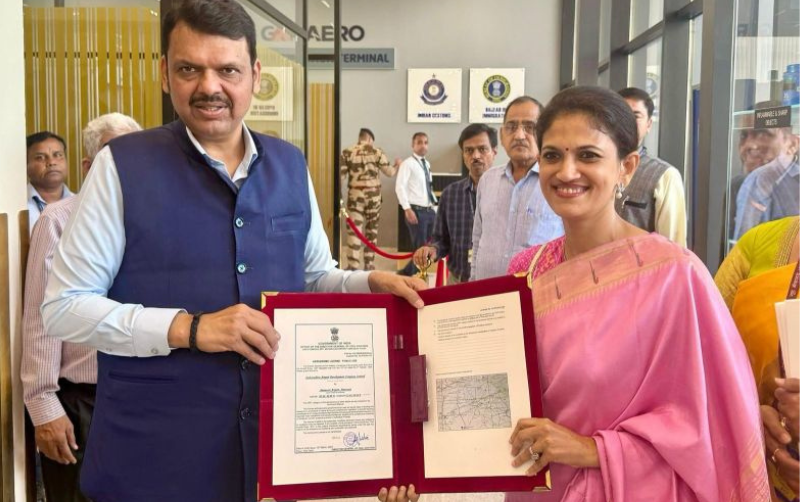
Starting from zero in the aviation industry, she renovated the Shirdi airport, started night landings, plans are added to make an International airport soon, and acquired work for the Ratnagiri airport-that supports the entire Maharashtra Konkan belt. Post that the honourable Chief Minister Fadnavis took 5 airports (from Reliance) -Nanded/Bharamati/Dharashiv/Latur and gave them to MADC to run. All the decisions are of course run by a board headed by the CM.
Her roots
Swati believes that ‘Legacy is from where you are born, and I was a person who felt that I had no roots, since my father was from West Bengal, having left behind the East. He had walked through long stretches of communal riots and the mighty Padma River, famished onto the streets of Kolkata, not realizing he had left his home behind. They were almost beggars’.
Being of mixed heritage, Swati is half Bengali and half Oriya, speaks both languages, and believes in equal fluency. She hails from Bastar in Chattisgarh. Growing up with other children, the forests spoke to her, and she always wondered why the tribals were not included in the mainstream of life. Her dreams were never given the back street, as her progressive father told everybody that his daughters would fulfil their dreams on their own terms. This shaped her entire life. Her move from Chemistry to Anthropology?-‘Chemistry didn’t talk to me people did and anthropology was a relative study, so it appealed to me’ she explained.
Swati was 22 years old when she became a gold medallist in Anthropology from the University of Pune in 1996.. was picked up by UNICEF (funded by the World Bank as a data collector in Bihar). Travelling solo for her fieldwork changed her entire outlook, making her observe, adapt, and understand alternative truths. Swati joined the civil services in 1997, and her first posting with the India post was like a paradigm shift. She was made the senior superintendent (first lady officer) of post offices in Chandrapur/ Gaj Roli,(a place of LWE).
Why did she want to join the government and not the private sector?- ‘I had travelled to the heartland of the country and realized that only being in the government could bring about change and make the system work. In my opinion, what works is when politicians, bureaucrats (that is, the legislature), and executives work together. My first choice was the IAS like everybody but not the IPS as I did not want to be the woman in uniform but the woman in beautiful clothes doing the same job’.
So has it been being in the right place at the right time- her doing? Not being the woman who shies away from a challenge she exclaimed –‘I really don’t understand that, since so many times I have been at the wrong place, and how does one then make everything right? I think it’s the question of maximising what one has’
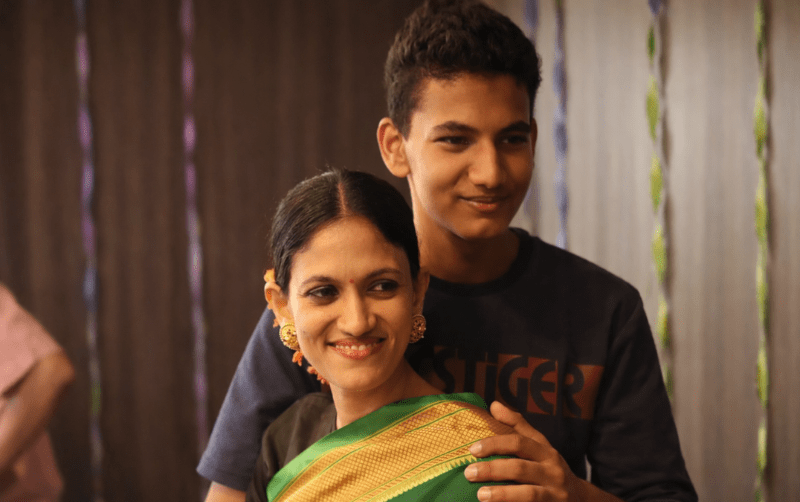
A woman who came from a small town, with hunger in her belly, her dream was also obviously bigger than the town she left behind. Marriage for some people defines them but not so for Swati, it just enhanced her journey. Today, her family consists of her mother, her husband Madhukar Pandey, the current Commissioner of Police (Mumbai), son-Malhar Pandey, who works in finance at Hdfc, handling their Mutual funds, and their outreach engagements.
Swati is a recipient of the Homi Bhabha Award of Excellence, a TEDx speaker, an Indian School of Business (ISB) alumna, a textile connoisseur and a conservation enthusiast.